
When the temperature drops outside, double glazing containing Low-E glass acts as a superb protector, insulating your interior from the extremes. However, it can reveal an interesting phenomenon.
The outer surface of high-performance double glazing tends to remain cooler than the surrounding air due to its insulation properties. Meanwhile, moisture in the air is always lurking, looking for an opportunity to cause mischief.
When the temperature of the glass falls below the dew point temperature, the air reaches its saturation point and moisture starts to condense. This results in the formation of tiny droplets on the glass surface, similar to the dew on grass in the morning or the beads of liquid on a refreshing beverage.
Rest assured, this occurrence is completely normal. It indicates that your high-performance glass is doing its job by maintaining a comfortable environment inside. With a slight change in the weather, those droplets will vanish, restoring a clear view.
It is normal for the aluminium to feel wet or cold to the touch after double-glazing installation. This can occur due to thermal conductivity, where the cold from outside is transferred through the aluminium frames. The moisture occurs because the internal temperature of the building is higher than the outside temperature, causing condensation on the colder surface of the aluminum frames. This is more prominent during the colder months of the year when the temperature differential is higher.
Let’s face it. We’ve got a lot of products to pick from, and even more we don’t have listed on our website. So we understand that it can be hard to figure out which is best for you. But glass plays a bigger role in your building than you’d think, so it really is important you pick the right product.
Luckily, we’ve listed all of our Glass Types in one location to help you. However, if you get stuck, please contact us – we love helping customers find the right solution.
The presence of moisture on the aluminium after retrofit double glazing doesn’t necessarily mean it has failed. It’s due to the changes in how the aluminium frames transfer cold. Moisture occurs when there’s a big temperature difference between inside and outside, especially when it’s very cold outside and warm inside.
So no, the moisture on the aluminium after retrofit double glazing doesn’t mean it has failed. It’s because of the changes in how the aluminium frames handle the cold. It usually happens when it’s really cold outside and warm and cozy inside.
To answer this question, we need to know a few things about your home. Understanding what the climate is where you live as well as what direction your windows are facing allows us to give you the best advice for picking the right glass.
By choosing the right glass you can use the orientation of your house to your advantage. In addition to the position of your house, the position and shading of your windows is also an important consideration. In general, high insulation performance is a good option, while the level of solar control you’ll need depends on climate. Cooler climates favour products which allow in more heat, while warmer climates in the north of the country benefit from glass that keeps warmth out.
For more on choosing the right glass for your climate and house orientation check out our Energy Performance page where we get into the detail.
Always use a mild detergent that is specifically designed for use with glass and steer clear of any products that will introduce grit as this can cause scratches.
Also avoid any cleaners which contain Hydrofluoric or Phosphoric acid as they are corrosive to glass surfaces. If cleaning a mirror simply wipe the surface with a few drops of methylated spirits using a damp cloth. Always avoid contact with the silver backing, particularly at the edge of the glass as this can cause damage.
For a spotless surface finish by polishing your glass or mirror using a dry lint free cloth – voila, picture perfect!
If you’d like more information on how to clean glass including specialised instructions for our range of products check out our collection of cleaning instructions.
Luckily, we’ve listed all of our Glass Types in one location to help you. However, if you get stuck, please contact us – we love helping customers find the right solution.
Glass is generally a supremely clear material, which makes it difficult to inspect. Thankfully, there is a standard in New Zealand (AS/NZS 4667:2016) that outlines the correct procedure for inspecting your glass:
Stand 3m back from the piece of glass you are viewing.
Ensure the glass is in an upright position.
Look at the glass for not more than 60 seconds with a daylight background.
You’ve come to the right place. We offer glass products that can greatly improve energy management, comfort, safety, security, colour and design – we can even reduce your time cleaning! We’re keen to help you meet specific requirements including acoustic properties, building compliance (including Section J) and engineering support. Whether you’re building balustrades, roof glazing or flooring we can help you.
We love technical talk, so give us a call and we’ll put you in touch with an Architectural Manager who can take you through what you need to meet your specification. We also offer training and consultancy services so let us know if that’s what you’re after.
You may want to check out these sections on our website too:
Product Finder
TechOnline
Architectural Glass Selection Guide
The R-Value is the thermal resistance of a glass or window system including the glass, The higher the R-value, the less heat is transmitted throughout the glazing material. The R-value is the reciprocal of the U-value.
To give you the best price indication, we’ll need to know a little bit about who you are, where you are and what you need.
Luckily, we’ve got a team of experts who would love to talk about your project, or put you in touch with the best person to speak to for a quote.
Please don’t hesitate to get in touch so we can get started!
Toughened Glass is flat or curved glass that has been heat-treated to induce a high surface and /or edge compression. Fully toughened glass, if broken will fracture into many small pieces (dice) which are more or less cubical. Fully toughened glass is approximately 4 to 5 times stronger than annealed glass of the same thickness when exposed to uniform static pressure loads. It is sometimes called ‘Tempered glass’.
Double Glazing is when two panes of glass (separated by a layer of air), are used in a home’s window. This provides another layer of insulation for your home, decreasing heat loss through your windows.
In the past, windows were fitted with a single pane of glass, which proved to be a particularly efficient heat conductor.
Ongoing research has shown that adding a second pane of glass, with a sealed pocket of air (or gas) in the middle, dramatically reduces the loss of heat through windows.
STL is Sound Transmission Loss which is the reduction of the amount of sound energy passing through a wall, floor, roof, etc. It is related to the specific frequency (1Hz) at which it is measured and it is expressed in decibels (dB). Also called Transmission Loss (TL).
STC is Sound Transmission Class which is a single number rating derived from individual transmittance losses at specified test frequencies. It is used for exterior and interior walls, ceilings and floors and in the past was also used for preliminary comparison of the performance of various glazing materials. If you’re glass needs to meet a specific Db rating, please contact us.
Tempered Glass is flat or curved glass that has been heat-treated to induce a high surface and /or edge compression. Fully toughened glass, if broken will fracture into many small pieces (dice) which are more or less cubical. Fully toughened glass is approximately 4 to 5 times stronger than annealed glass of the same thickness when exposed to uniform static pressure loads. It is sometimes called ‘Tempered glass’.
Check out Viridian Tempered Glass (VTough)
Application for Tempered Glass
- Residential and commercial
- buildings where Grade A safety glass is a requirement
- Shower enclosures
- Spandrel and thermal safety
- Furniture
- Balustrades
- Shopfronts and entrances
Colors of Tempered Glass
- Clear
- Grey
- Bronze
- Green
Solar Control Glass is tinted and/or coated glass that reduces the amount of solar heat gain transmitted through it.Solar Control Glass is tinted and/or coated glass that reduces the amount of solar heat gain transmitted through it.
Solah Heat Transmission is the amount of solar energy transmitted directly through glass, compared with the total solar energy impinging on the exterior glass surface. It is typically expressed as a percentage.
Security glass is a thick laminated or multi-laminated glass designed to withstand various forms of violent attack. Specialist advice should be obtained to assist in the selection of this product.
Soda Lime Glass is The most commonly melted form of clear, uncoloured flat glass, so-called because a principal ingredient besides sand, is lime.
Safety wired glass is a single sheet of glass with wire completely embedded in the glass, which meets the test requirements of the relevant safety glazing standards.
Glass installed in schools
Glass can be a hazard at schools if it breaks. As a board of trustees, you need to manage this hazard, including knowing what kind of glass to install and what standards you need to comply with.
Meeting your health and safety responsibilities
Keeping people safe from the hazards of broken glass is part of your overall health and safety responsibilities. We recommend you review your school’s health and safety systems.
Health, safety and wellbeing
This will help you meet the requirements of the Health and Safety at Work Act 2015.
Health and Safety at Work Act 2015 — NZ Legislation website
Deciding on the type of glass
Give the information on this page to your project manager and contractors fitting new or replacement glass at your school.
Grade A safety glass
You must use Grade A safety glass in these situations:
- Where there’s a risk of people falling against it.
- In all doors and panels around doors.
- In buildings where there’s a higher risk, such as:
1. gyms and swimming pools
2. buildings that are within 6 metres of playgrounds, courts or playing fields
3. halls, viewing galleries or grandstands. - When installing or replacing glass in a building where the glass starts less than 1.6 metres from the lowest point, such as the ground, the floor, outside decking or any raised seating.
Where a window begins less than 1.6 metres from the ground, and goes higher than 1.6 metres, take the safety glazing to the top of the window or to the next transom (the horizontal cross piece of the window).
Where the window begins at ground level and goes up to 2 metres or higher, use safety glazing unless the glass is protected by mesh, guards or some other similar protection.
Other glass
In all other cases, all glass should be installed to the following Standard.
New Zealand Standard 4223.3:2016
Note that some glazing may be fire rated. In these instances, ensure the integrity of the fire protection remains compliant with regulations.
Double glazing
You may wish to upgrade your windows to double glazing. If you’re using aluminium, make sure you use frames that are thermally broken or insulated. Aluminium is a good conductor of heat so if it’s cold outside, the frames will be cold inside and suffer from condensation.
Anti-graffiti film
A common issue for schools is the scratching or etching of glass by vandals. One solution is to install an anti-graffiti film. This is an optically clear protective film that is applied to exterior glazing to prevent glass damage.
Maintaining your glazing
You should check the glass in your school regularly. If there are changes to your school, such as new courts being built, this could introduce new hazards and ordinary glass may have to be replaced with safety glass.
Paying for glass
Pay for glass in new buildings or alterations out of your project budget, for example, an upgrade project paid for with 5 Year Agreement (5YA) funding.
5YA funding
To pay for replacing broken glass or to install new safety glass, use your school’s Property Maintenance Grant (PMG) funding.
PMG funding
A Safety Mirror is mirror which has a sheet of organic material permanently bonded to one side so that the mirror holds together if broken and meets the test requirements of the relevant code.
Safety Glass is glass type that meets the requirements of AS/NZS 2208. Safety glass is treated or manufactured into a form that reduces the likelihood of a cutting and/or piercing injury to persons by the glass should it be broken by human contact. Laminated and toughened safety glass are rated Grade A. Wired glass is rated Grade B.
Retrofit double-glazing is the process of replacing your existing single glazing with double glazed units. Retrofit double glazing allows for home owners to retain their existing joinery, as only the glass is removed. To give you an idea of how much this will cost you, simply click on the “Quote Estimator” button below:
NFRC 100 is The standard specifying environmental conditions, (i.e. wind speeds, internal and external temperatures, solar radiation levels and heat transfer coefficients) and procedure used to determine the performance characteristics of glass types. The Australian glass and glazing industry has adopted the NFRC 100 – 2001 methodology through the AFRC (Australian Fenestration Rating Council).
NFRC is National Fenestration Rating Council – the American body which manages the performance ratings of various glass types.
Low E Glass is low emissivity glass and is commonly known as ‘Low-E’ glass. Emissivity is the rate at which heat leaves a building. Therefore, Low-E glass has a lower rate of heat-loss compared to glass that is not Low-E. In New Zealand there are two types of Low-E glass: soft coat and hard coat. Soft coated glass is extremely sensitive and can be clearer than clear glass. Due to its sensitivity, it needs to be created within an insulated glass unit. Hard coated glass does not need to be sold within an insulated glass unit, however there may be a haze accross the glass under certain light conditions.
Laminated Safety Glass is Laminated glass that satisfies the test requirements of the relevant safety glazing material Standards.
Laminated Glass is a composite material consisting of two or more sheets of glass permanently bonded together by a plastic interlayer. NOTE Laminated glass will crack and break under sufficient impact, but the glass will tend to adhere to the plastic interlayer instead of falling apart.
Check out our Laminated Glass (VLam™)
IGU is Insulating Glass Unit (IGU) which is Two or more panes of glass spaced apart and pneumatically sealed with dry air or a special gas in the unit cavity. Often abbreviated to as IGU.
Check out our Laminated Glass (VLam™)
Choose argon gas for your double glazing when you want to keep heat inside your building. Argon gas is an inert, non-toxic gas that is more dense than oxygen. It is placed between glass panes in an insulated glass unit in order to slow the rate of heat loss.
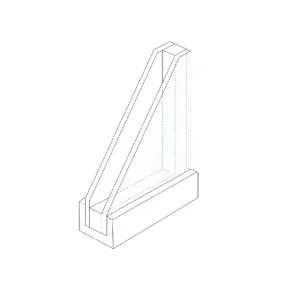
Annealed Glass is Glass cooled gradually during manufacture in an annealing operation to reduce residual stresses and strains that can occur during cooling. Technically, the stress condition of ordinary glass which is glass that can be cut and processed. This is the normal cuttable glass that is generally available.
Check out Viridian Annealed Glass (Vfloat)
Application for Annealed Glass
Where visibility and light transmission are important
General glazing
Further processed as toughened, laminated or toughened laminate glass
Insulating glass, mirror coated and screen printed
Colors of Annealed Glass
Clear
Grey
Bronze
Green
U Value is A measure of air-to-air heat transmittance (loss or gain) due to thermal conductance and the difference in indoor and outdoor temperatures. As the U-value decreases, so does the amount of heat that is transferred through the glazing material. The lower the U-value, the better the insulation.